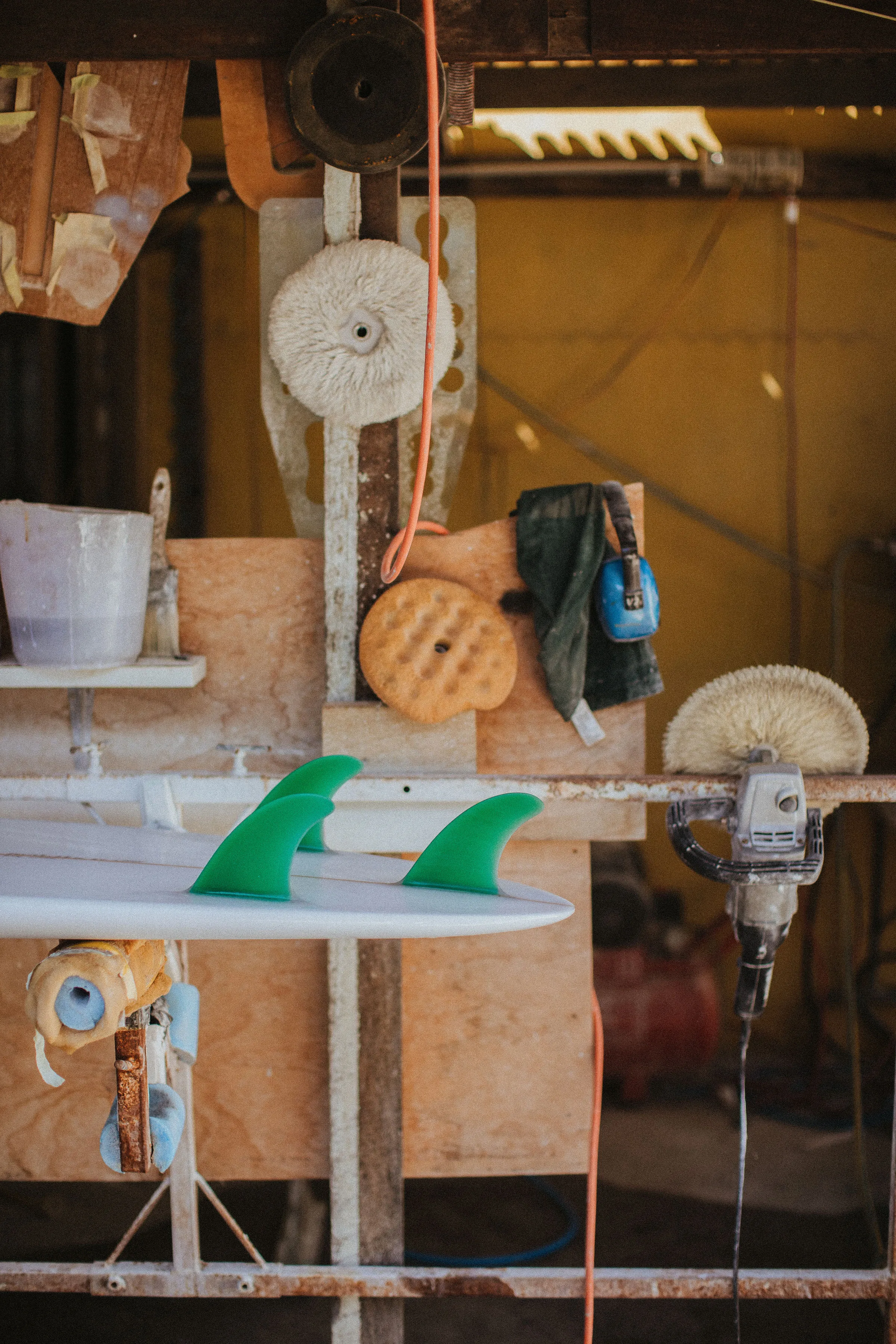
A surfboard is, by nature, a petrochemical object: foam, resin, cloth. Early on, the UWL workshop asked itself about its footprint — and looked for concrete answers rather than slogans.
2004: the Greenboard prize
As early as 2004, the company won the first prize in the EuroSIMA eco-innovation contest with the Greenboard project. The concept laid the groundwork for a global rethink: workshop waste management, reduction of volatile organic compound (VOC) emissions, and analysis of a board’s carbon footprint. The target — a product made of 90% natural or recycled materials, and economically viable.
Materials that change things
Today, that research shows up in everyday production. Some models pair a bio-based foam blank with fibreglass cloth upcycled from aerospace offcuts. Durability is reinforced through advanced laminations: EPS foam, bio-based epoxy resin, anti-compression cores, and carbon reinforcement placed exactly where flex must be controlled.
These choices are not neutral for the glide: they change a board’s weight, liveliness and lifespan. That’s the whole point of our materials page, which details the role of each component, and of the craft that shapes them.
An ethic, not a pitch
Eco-design only makes sense if it stays demanding on performance. A cleaner board that doesn’t surf serves no one. By documenting these advances — as the UWL ecosystem’s technical blog also does — the aim is to make the subject legible, without greenwashing, for surfers who want to understand what’s under their feet.
Coastline and ocean protection is led in Europe by NGOs such as Surfrider Foundation Europe.